You get enough sleep. You’ve tried eye creams. Maybe even cold spoons or an extra pillow. And yet those bags under your eyes are still there. That can be frustrating.
The most important thing to know: not all under-eye bags have the same cause. And as long as you don’t know which type you have, you’ll often only be treating the symptoms rather than the actual problem.
In this article, you’ll find out what really helps against bags under your eyes, when simple measures are enough and when a more targeted treatment is needed.
What are bags under the eyes?
Bags under the eyes are visible changes in the area below the lower eyelid that can make you look tired or older. Sometimes it’s mild swelling, sometimes a permanent bulge or a shadow that won’t go away, not even after a good night’s sleep.
The skin under the eyes is thin and delicate. As we age, the structure of this area changes. The supporting tissue weakens, fat can push forward and the skin loses firmness. On top of that, fluid can build up temporarily, for example after a short night or a salty meal.
Not all under-eye bags have the same cause. And that is exactly what determines which approach will be effective.
What helps against bags under your eyes?
Below you’ll find tips that can help with temporary under-eye bags, for example when the swelling is caused by fluid retention, lack of sleep or lifestyle. With permanent bags, the cause usually lies deeper, such as shifted fat or volume loss under the eyes. In that case, simple measures are usually not enough.
The following tips can help to temporarily reduce bags under your eyes:
1. Cool the area under your eyes
Cold constricts the blood vessels and reduces temporary swelling. A chilled eye mask or a cold spoon can give 5 to 10 minutes of relief. This works best for fluid-related bags.
2. Get enough sleep, on a regular schedule
Fluid is drained more effectively during the night. Regularly getting less than 7 hours of sleep can make swelling and shadows worse.
3. Limit salt in the evening
Salt makes your body retain fluid, which can also collect under your eyes. Especially in the evening, this can show up the next morning.
4. Raise the head of your bed
Sleeping with your head slightly elevated helps prevent fluid from collecting under your eyes.
5. Treat allergies early
Chronic irritation and rubbing around the eyes can make swelling worse. Tackling allergies often reduces under-eye bags as well.
6. Encourage gentle lymphatic drainage
A gentle massage towards the temples can help drain fluid, as long as it’s done carefully.
7. Use an eye product with proven ingredients
Caffeine can temporarily reduce swelling. Retinol and vitamin C support skin quality, but have no direct effect on fat bags.
Are your under-eye bags still visible despite these tips? Then the cause is often shifted fat or volume loss under the eye. In that case, a targeted treatment is usually needed for a lasting result.
Reducing bags under your eyes without surgery
If your under-eye bags don’t go away with simple measures, but surgery isn’t what you want, there are several non-surgical options. The right treatment depends on the type of under-eye bag.
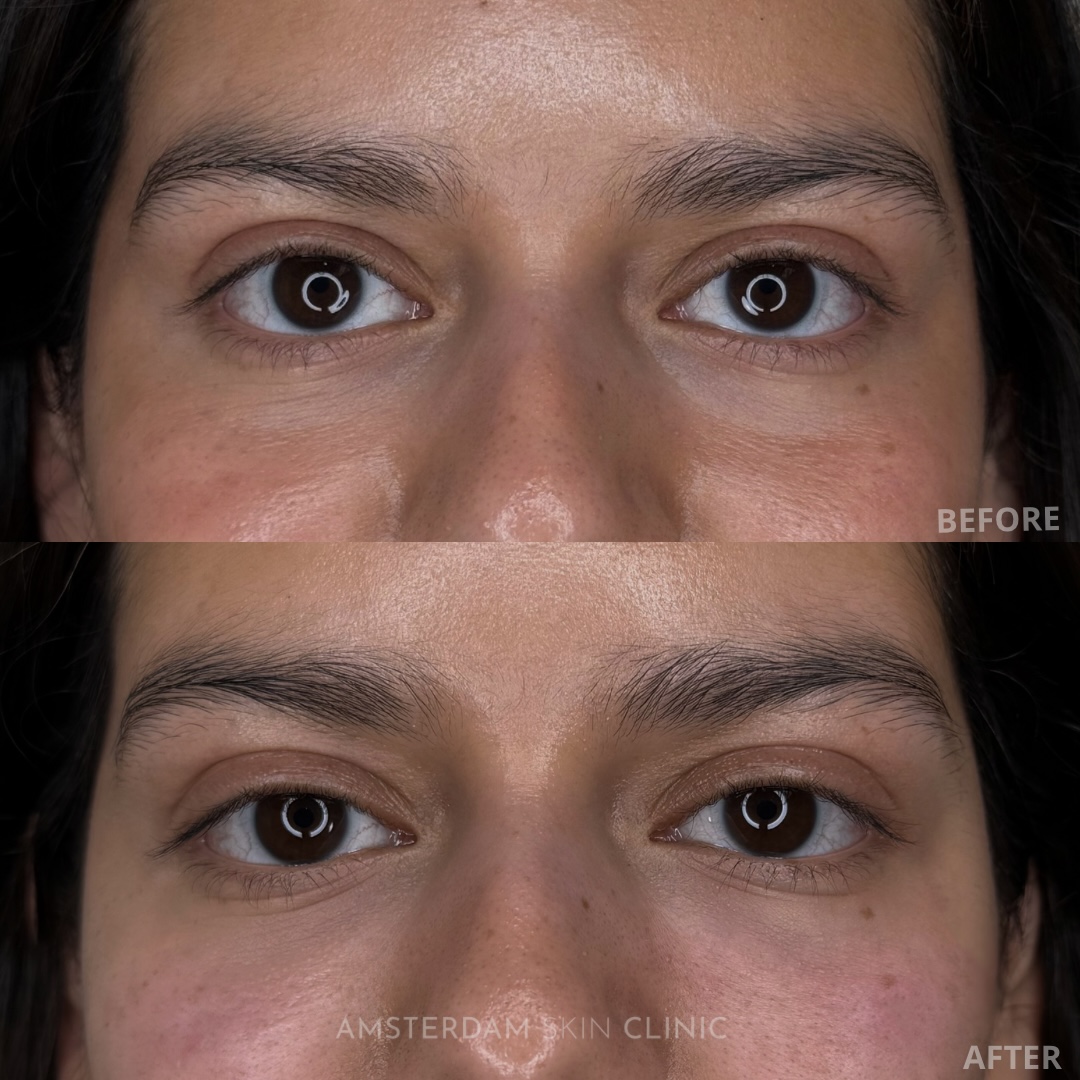
For a tear trough, a tear trough treatment with hyaluronic acid filler can subtly restore lost volume under the eye. This reduces shadowing and makes the under-eye area look fresher and smoother. When skin laxity plays the main role, skin-improving treatments such as PRF or Salmon DNA (polynucleotides) may be a good option, as they can stimulate collagen production.
Not every under-eye bag is suitable for non-surgical treatment. That’s why a careful assessment is needed to determine which treatment is safe and effective.
During a free consultation, our doctors carefully assess the area under your eyes. They look at skin quality, shifted fat, volume loss and facial symmetry. Based on this assessment, they advise which treatment is most effective and safe in your situation. Sometimes a subtle, non-surgical treatment is enough, and sometimes a different approach is needed for a lasting result.
When is surgery needed?
With pronounced fat bags or excess skin under the eyes, a lower eyelid correction (lower blepharoplasty) can be the most effective solution. This is especially the case when the bags are permanent and don’t improve with non-surgical treatments.
Whether surgery is suitable depends on the severity and the anatomy of the under-eye area. A careful assessment is therefore essential.
Different types of under-eye bags
There are different types of bags that can appear under the eyes. The four most common are fluid-related bags, fat bags, a tear trough and skin laxity.
Fluid-related bags
Fluid-related bags are caused by a temporary build-up of fluid under the eyes and are often more noticeable in the morning. They feel soft and can fade during the day.
This type of bag is usually influenced by sleep, salt intake, hormones or allergies. In many cases, fluid-related bags respond well to lifestyle changes.
Fat bags
Fat bags are permanent bulges under the eyes. They barely change with sleep or diet and often become more noticeable over the years.
They develop when fat that normally sits around the eye pushes forward because the supporting tissue has weakened. Because this is a structural change, fat bags don’t disappear on their own.
Tear trough
A tear trough is not swelling, but a lack of volume under the eye. This creates a shadow or a tired appearance without any puffy tissue.
In many cases, this can be treated with a tear trough filler treatment, which subtly restores lost volume and smooths the transition between the under-eye area and the cheek.
Skin laxity
With skin laxity, the skin under the eyes loses firmness and elasticity. This shows up as fine lines, thinning skin and sometimes slight creasing.
Skin laxity can occur on its own or together with fat bags or a tear trough. In some cases, a skin-firming treatment can help improve skin structure and make the under-eye area look firmer. A treatment such as microneedling, for example, can help improve skin texture.
What causes bags under the eyes?
Bags under the eyes can have various causes. In many cases, it’s not one single factor but a combination of ageing, genetics and lifestyle. Below are the main causes of bags under the eyes.
Ageing
As we get older, the structure of the under-eye area changes:
- The skin loses collagen and elasticity
- The supporting tissue weakens
- Fat can push forward
- The face loses volume
This can cause fat bags to develop or make a tear trough more visible.
Genetics
Some people develop under-eye bags at a young age. Fat bags and a deep tear trough in particular can be genetic.
Fluid retention
A build-up of fluid under the eyes can cause temporary swelling. This is often influenced by:
- Salt intake
- Hormonal fluctuations
- Lack of sleep
- Allergies
- Reduced lymphatic drainage
Fluid-related bags are usually more noticeable in the morning.
Allergies
Chronic irritation or frequent rubbing of the eyes can make swelling and thickening of the skin worse.
Hormonal fluctuations
During menstruation, pregnancy or menopause, the body can retain more fluid, including under the eyes.
Poor sleep
A lack of sleep can increase swelling and shadowing, making under-eye bags look more prominent.
Smoking and sun exposure
Smoking and UV radiation speed up skin ageing and reduce the firmness of the under-eye area.
No-obligation advice
Not sure which type of under-eye bags you have or which treatment is right for you? During a no-obligation consultation, our doctors carefully assess the under-eye area and give you personal, honest advice.