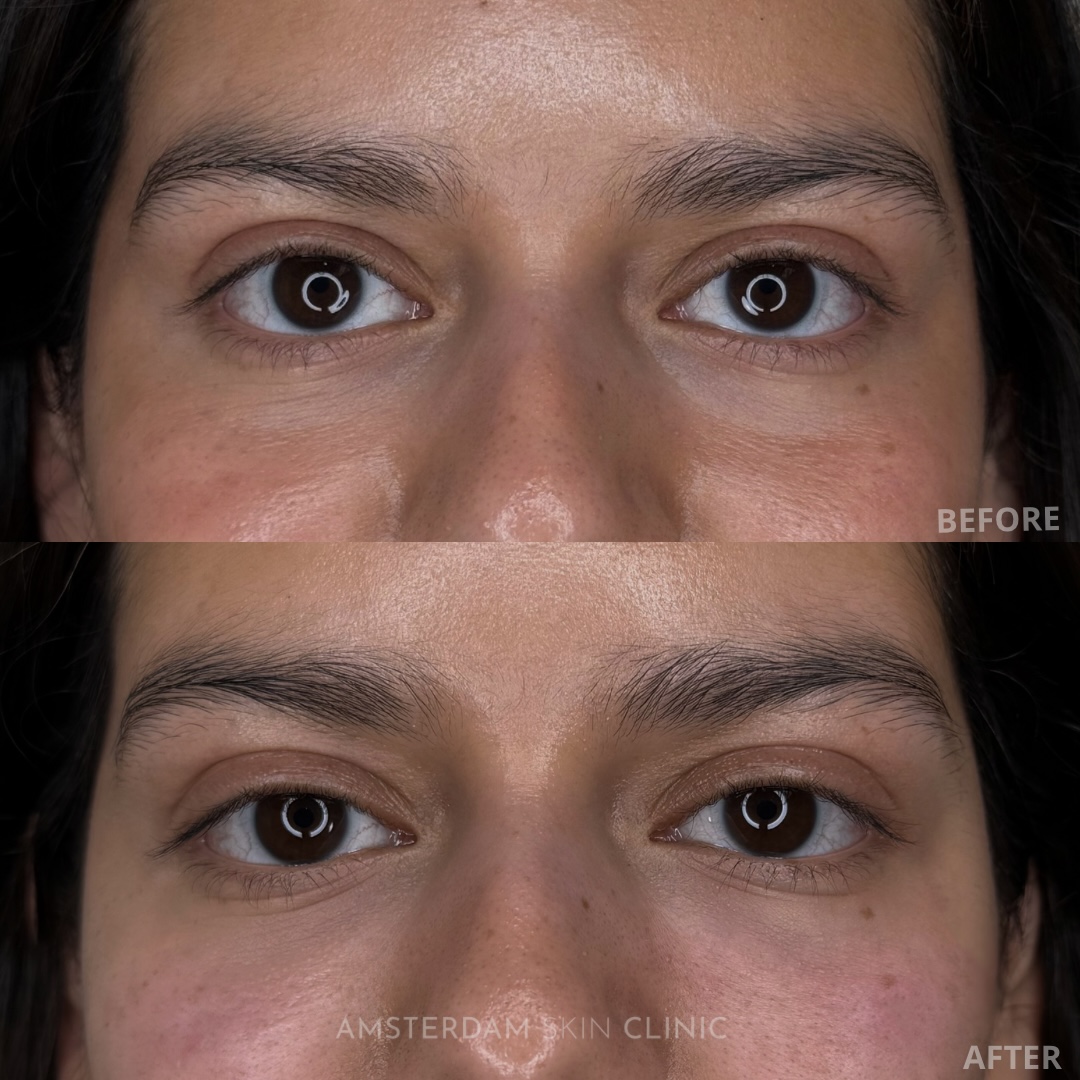

Bags under the eyes can have various causes. Many people assume they are always caused by fluid, but that is often not the case. In practice, we usually see that bags under the eyes are caused by one of two things: fluid build-up or fat that pushes forward under the eye.
We call these fluid bags and fat bags. At first glance they can look similar, but the cause and possible treatment are different. That also means the way they can be treated differs.
In this article, we explain the difference between fluid bags and fat bags, how to recognise which type you have and how they can be treated.
Fluid bags: temporary swelling under the eyes
Fluid bags are caused by a temporary build-up of fluid in the area under the eyes. The skin under the eyes is thin and sensitive, so even a small amount of fluid can show up as swelling.
Fluid bags are often most noticeable in the morning. During the day, the swelling can gradually go down as the body drains the fluid again.
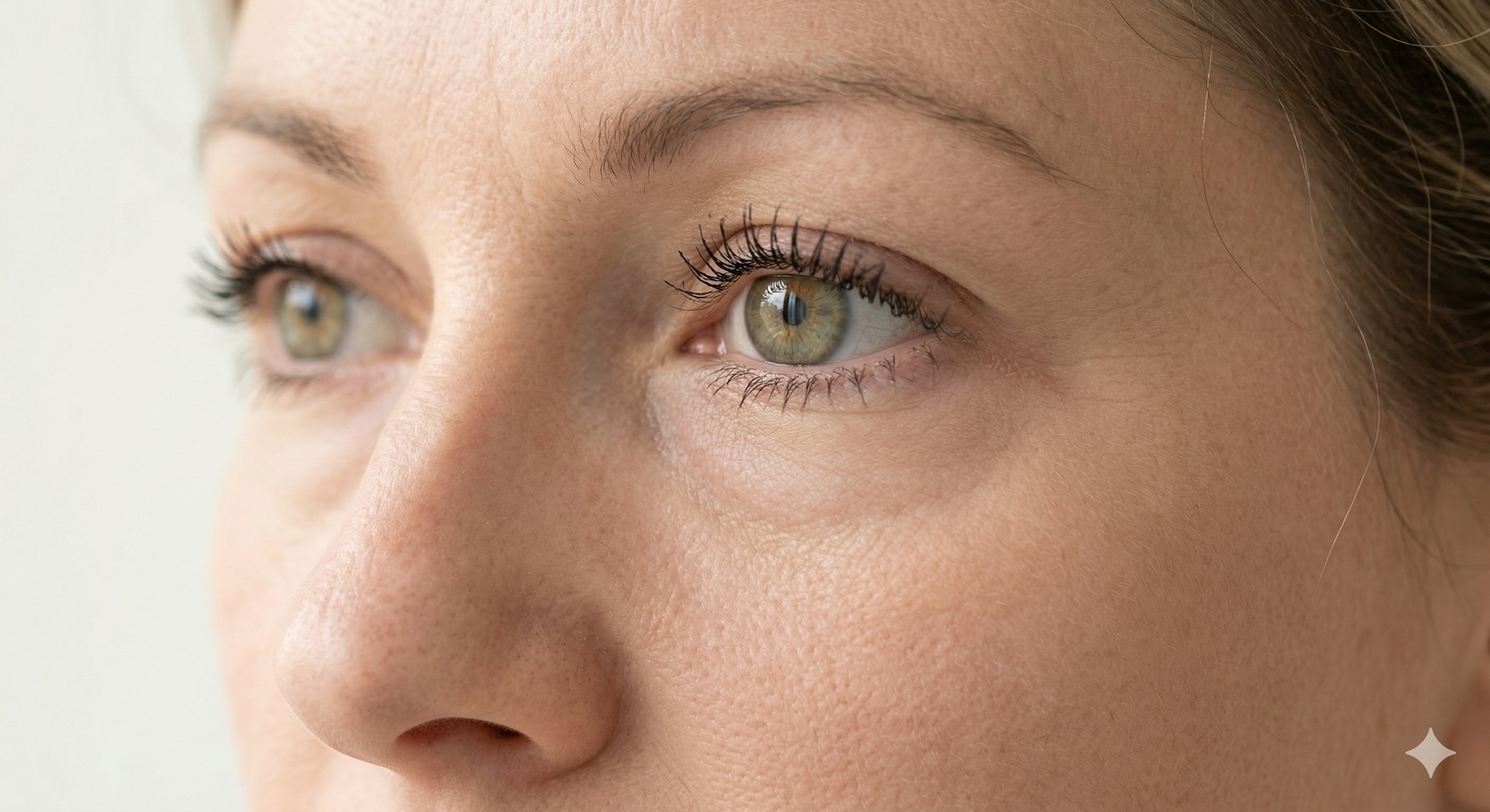
Causes of fluid bags
Various factors can contribute to fluid bags. A salty meal, for example, can make the body retain more fluid. Lack of sleep, hormonal fluctuations and allergies can also contribute to temporary swelling under the eyes. Lymphatic drainage plays a role too. When fluid isn’t drained as efficiently, it can build up more easily in the under-eye area.
Fat bags: a permanent bulge under the eye
Fat bags have a different cause than fluid bags. In this case, it’s not temporary swelling, but a permanent bulge under the eye.
There is naturally fatty tissue around the eye that protects it. As we age, the supporting tissue that holds this fat in place can gradually weaken. This allows the fat to push forward slightly, creating a noticeable bag under the eye.
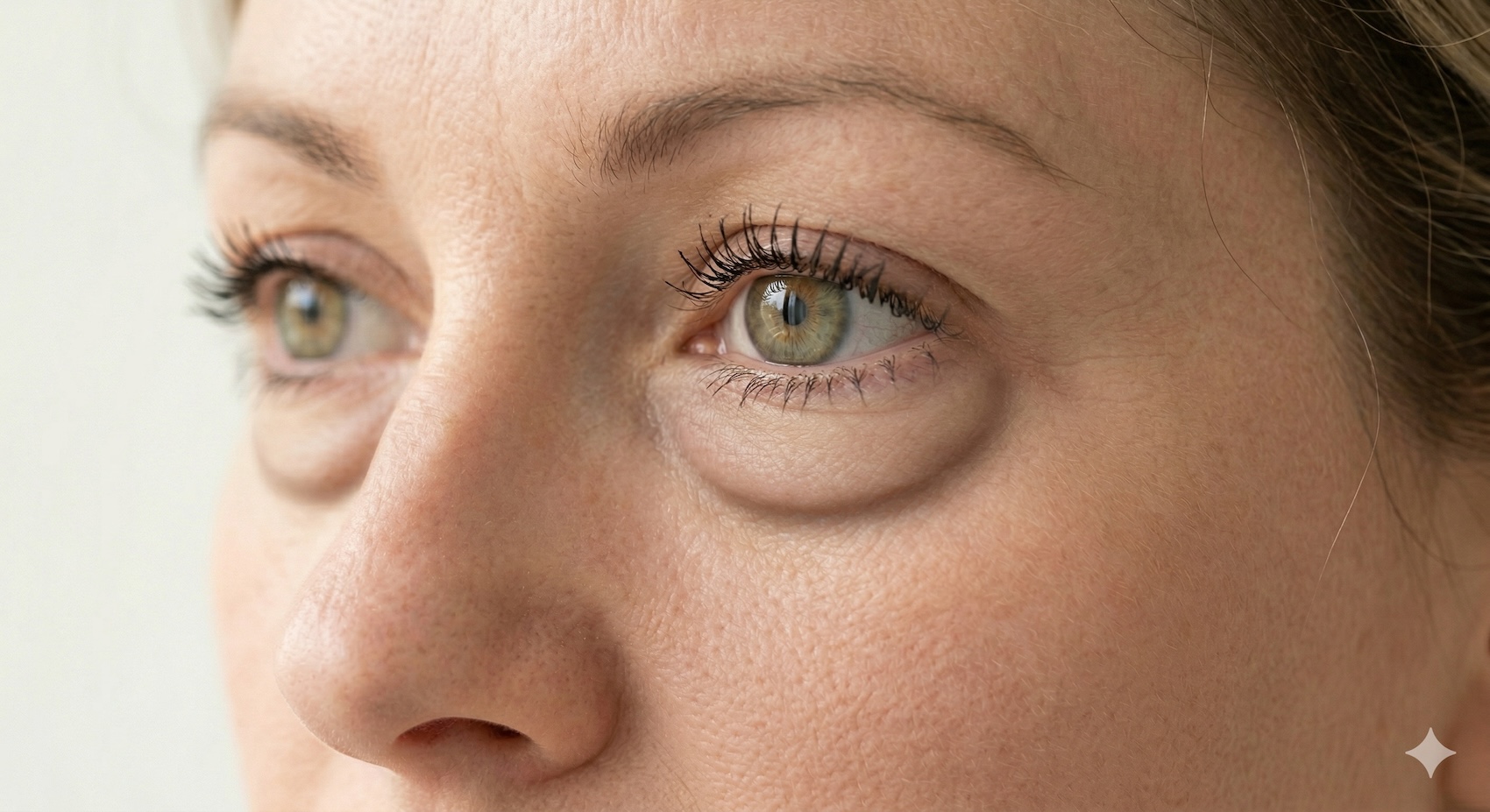
Causes of fat bags
Unlike fluid bags, fat bags barely change during the day. They remain visible regardless of sleep, diet or lifestyle. Over the years, they can even become more noticeable as the skin and underlying tissue continue to change.
How do you tell the difference between fluid bags and fat bags?
Fluid bags and fat bags can look very similar at first glance, but there are clear differences. These differences help you determine which type of bag you have and which approach works best. Below is an overview of the main characteristics:
Fluid bags:
- Often worse in the morning: Fluid bags are usually most visible right after waking up, because fluid collects overnight and drains more slowly.
- Softer and temporary: Fluid bags often feel softer and usually go down during the day as the fluid drains away.
- Respond to sleep and lifestyle: This type of bag is strongly influenced by sleep, diet (such as salt intake) and allergies. Improving these lifestyle factors can often help reduce fluid bags.
Fat bags:
- Always visible: Fat bags are a structural issue and don’t go away on their own. They remain visible throughout the day, regardless of sleep or diet.
- Barely change during the day: Fat bags don’t change much, not even with a healthy lifestyle. They stay present and often become more noticeable over the years.
- Feel firmer: Fat bags have a firmer texture and, unlike fluid bags, are harder to influence through external factors such as sleep or diet.
- Gradually become more noticeable with age: As you get older, fat bags in the under-eye area can become more prominent as the supporting tissue weakens.
With these differences in mind, it’s easier to tell whether you’re dealing with temporary fluid bags or structural fat bags. It’s important to know, however, that the treatment for each type varies considerably.
Treating fluid bags
Fluid bags are often caused by a temporary build-up of fluid under the eyes, which is usually related to lack of sleep, diet or allergies. Treatment mainly focuses on improving lifestyle and skin condition. Getting enough sleep, limiting salt intake and managing allergies can already help reduce fluid bags.
In addition, treatments that improve skin structure, such as a chemical peel and microneedling, can strengthen skin condition, which helps reduce the visibility of fluid bags in the longer term. A chemical peel makes the skin feel healthier and firmer, while microneedling stimulates circulation and improves skin texture. These treatments can make a noticeable difference for fluid bags that are mainly influenced by skin condition.
Treating fat bags
Fat bags are caused by weakening of the supporting tissue around the eye, which allows fat to push forward and form the familiar bulges under the eyes. This type of bag can’t be resolved with lifestyle changes, as it is usually a structural issue.
In some cases, a tear trough filler treatment may be considered, for example when there is a hollow under the eye that causes shadowing and a tired appearance. By subtly filling this hollow, the transition between the under-eye area and the cheek can become smoother and the area looks fresher. Read more about the tear trough filler treatment.
It is important to know, however, that filler is not suitable in every case. With pronounced fat bags, filler can actually accentuate the swelling rather than improve it. That’s why the cause and the most suitable approach are always assessed first during a free consultation. In some situations, the advice is to not have any treatment, while in other cases a lower eyelid correction may be a better option for a long-lasting result.